Have you ever described someone as antagonistic and wondered what that really means?
Or maybe you’ve seen it in texts, social media comments, or even workplace feedback.
Understanding the antagonistic meaning helps you navigate conflicts, communicate effectively, and identify behaviors that could be harmful or challenging.
This guide is fully updated for 2026, written in clear, human-friendly language, and includes examples from everyday life, chat, work, and relationships.
What Does Antagonistic Mean? (Definition & Origin)
Simple Definition
Antagonistic describes behavior, attitudes, or actions that are:
- Hostile or unfriendly
- Opposing or resistant
- Acting in conflict with someone or something
In short: Being antagonistic means being actively oppositional, combative, or difficult toward others.
It can apply to people, situations, or even abstract forces.
Origin of the Word
- Derived from the Greek word antagonistes, meaning opponent or rival
- Entered English in the 16th century
- Traditionally used to describe conflict or opposition in literature, drama, and debates
Today, it’s widely used in psychology, social interactions, workplace communication, and online discussions.
Antagonistic vs Aggressive: What’s the Difference?
While these words are related, they aren’t identical:
| Antagonistic | Aggressive |
|---|---|
| Opposes or resists someone/something | Uses force, threat, or hostility |
| Can be subtle (sarcasm, criticism) | Often direct and confrontational |
| Example: A coworker undermining your ideas | Example: Shouting or pushing someone in anger |
Tip: Someone can be antagonistic without being physically or verbally aggressive—they may simply oppose you consistently.
Antagonistic Meaning in Psychology
In psychology, antagonistic behavior is often studied in:
- Personality traits: People high in antagonism may be less cooperative, more competitive, and critical.
- Conflict studies: Antagonistic interactions often escalate misunderstandings.
- Mental health context: Persistent antagonism can strain relationships, reduce empathy, and create stress.
Example: Workplace
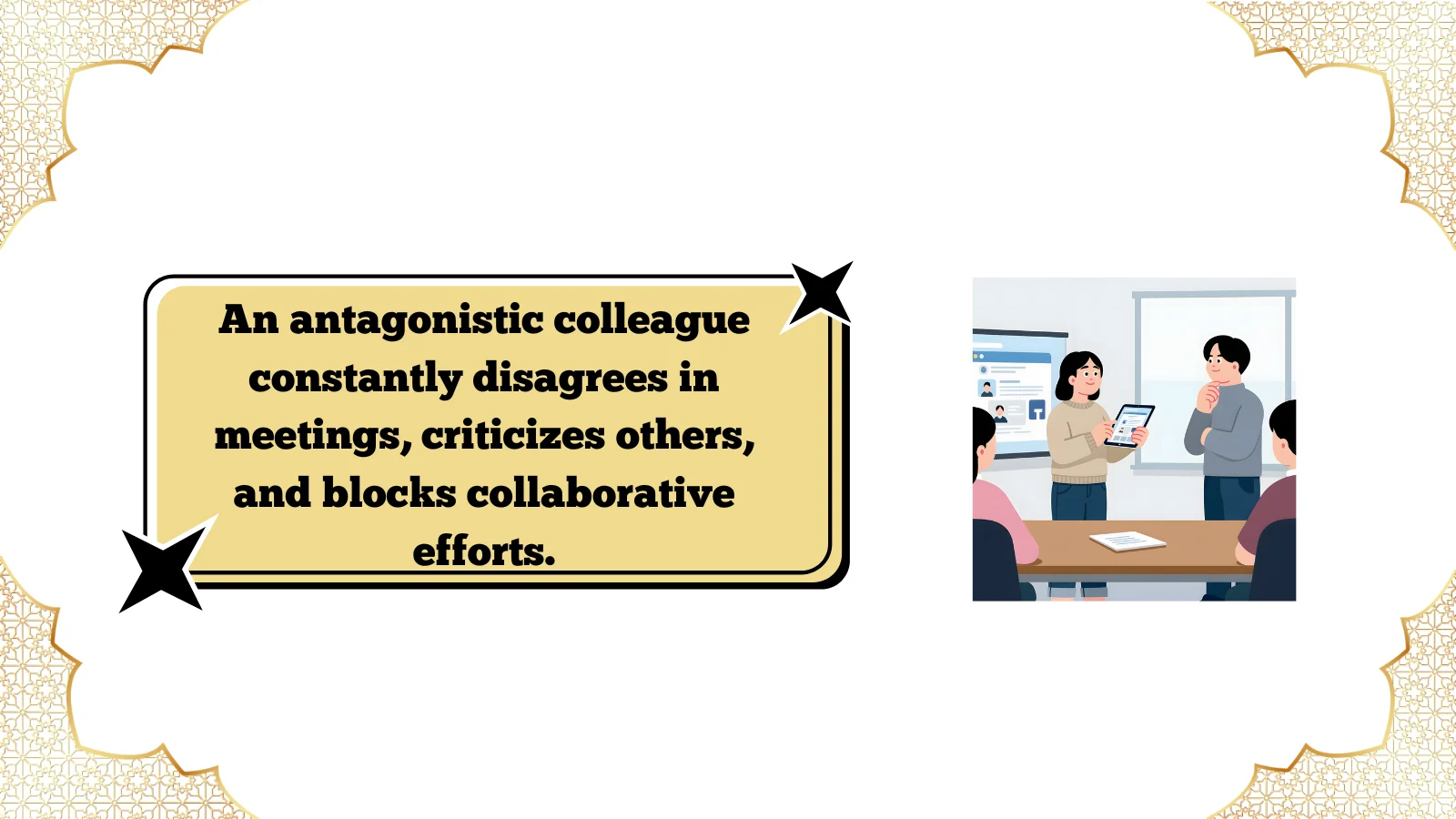
- An antagonistic colleague constantly disagrees in meetings, criticizes others, and blocks collaborative efforts.
Example: Family
- A sibling consistently opposes decisions or creates tension in family gatherings.
Antagonistic Meaning in Relationships
In relationships, antagonistic behavior can be subtle or overt:
Subtle Signs
- Sarcasm or passive-aggressiveness
- Dismissive responses
- Withholding support
Overt Signs
- Constant criticism
- Arguing without compromise
- Open hostility or resistance
Recognizing antagonism early can prevent long-term conflict and emotional strain.
Antagonistic in Texts and Chat
Online, antagonistic behavior can appear as:
- Flame wars or hostile comments
- Trolls intentionally provoking others
- Sarcastic or critical messages
- Resistance to collaborative decisions
Examples of Antagonistic Texts
- “Wow, nice try… not that it matters.”
- “I don’t think you can handle this idea.”
- “Sure, go ahead, but it’ll fail.”
Tip: Online interactions can exaggerate antagonism because tone and context are often missing.
Antagonistic in Social Media & Culture
Antagonistic behavior is not limited to personal interactions—it’s prevalent in:
- Political debates online
- Comment sections under controversial posts
- Competitive online communities (gaming, forums)
- Workplace culture discussions
Social media often amplifies antagonism, making understanding the term more important than ever.
Common Misunderstandings About Antagonistic
Misunderstanding #1: “Antagonistic Means Violent”
Reality: Antagonistic behavior doesn’t need to involve physical aggression—it can be verbal, emotional, or even passive.
Misunderstanding #2: “Antagonistic People Are Always Negative”
Reality: Some antagonistic behavior stems from different viewpoints or personality traits, not necessarily malice.
Misunderstanding #3: “Antagonistic = Enemy”
Reality: Being antagonistic is about opposition or resistance, not necessarily personal hatred.
Related Words & Concepts
If you’re learning about antagonistic, you may also encounter:
- Hostile – actively unfriendly
- Oppositional – resistant or contrary
- Confrontational – directly challenging
- Combative – ready to argue or fight
- Passive-aggressive – indirect antagonism
👉 Internal linking idea:
Articles like “Passive-Aggressive Meaning Explained” or “Hostile Meaning in Relationships” can complement this post.
Antagonistic Meaning in One Sentence
Antagonistic means being oppositional, hostile, or resistant toward someone or something, often creating conflict or tension.
How to Handle Antagonistic Behavior
- Recognize it – Identify patterns of opposition or hostility.
- Stay calm – Don’t escalate with equal antagonism.
- Set boundaries – Politely but firmly address behavior.
- Communicate clearly – Focus on facts, not emotions.
- Limit exposure – Online or offline, distance can prevent unnecessary stress.
Handling antagonistic behavior effectively protects your mental health and relationships.
FAQs
1. What does antagonistic mean?
Antagonistic means showing hostility, opposition, or resistance toward someone or something.
2. Is antagonistic always a negative word?
Yes, it usually describes conflict, disagreement, or unfriendly behavior.
3. What is an example of antagonistic behavior?
Constant arguing, provoking others, or acting in a hostile way is considered antagonistic behavior.
4. What is the difference between antagonistic and aggressive?
Antagonistic means opposing or hostile, while aggressive often involves forceful or harmful actions.
5. Can antagonistic be used in science?
Yes, in science it describes substances or forces that work against or block each other’s effects.
6. What are some synonyms for antagonistic?
Common synonyms include hostile, opposing, unfriendly, adverse, and confrontational.
Final Thoughts!
The antagonistic meaning goes beyond simple hostility.
It’s about opposition, resistance, and behaviors that can challenge collaboration, peace, or understanding.
Recognizing antagonism in work, relationships, or online spaces is crucial for healthy communication and conflict resolution.
Being aware allows you to respond thoughtfully, maintain boundaries, and even turn challenging interactions into opportunities for growth.
Leave a Reply