Jealousy is one of those words everyone thinks they understand until they actually feel it.
You’ll see it everywhere: in relationships, friendships, social media captions, chats, memes, and even jokes.
Someone posts a success photo and the comment section says, “They’re just jealous.”
But what does jealousy really mean?
Understanding the jealousy meaning isn’t just about vocabulary. It helps you recognize emotions, protect relationships, and avoid unnecessary drama both online and in real life.
In today’s hyper connected world, jealousy shows up faster and louder than ever, especially in texting and social media culture.
What Is Jealousy? (Definition & Origin)
Simple Definition of Jealousy
Jealousy is an emotional reaction that occurs when someone feels:
- Threatened
- Insecure
- Afraid of losing something important
- Upset that someone else has what they want
In short:
Jealousy is the fear of losing something you value to someone else.
That “something” could be:
- A romantic partner
- Attention
- Status
- Friendship
- Success
- Validation
Origin of the Word “Jealousy”
The word jealousy comes from:
- Old French jalousie
- Latin zelos (meaning zeal or rivalry)
Historically, jealousy was linked to possession and protection—especially in relationships. Over time, it expanded to include emotional, social, and even digital comparisons.
Jealousy vs Envy: What’s the Difference?
This is one of the most misunderstood topics, so let’s clear it up.
Jealousy
- Fear of losing something you already have
- Involves three parties (you, what you value, and a rival)
Example:
“I feel jealous when someone flirts with my partner.”
Envy
- Wanting something someone else has
- Involves two parties (you and the other person)
Example:
“I envy her confidence.”
👉 Quick rule:
- Jealousy = fear of loss
- Envy = desire for gain
What Does Jealousy Mean in Relationships?
In romantic relationships, jealousy is extremely common—but it can be healthy or unhealthy depending on how it’s handled.
Healthy Jealousy
Healthy jealousy:
- Is mild and temporary
- Signals emotional investment
- Leads to honest communication
- Does not involve control
Example:
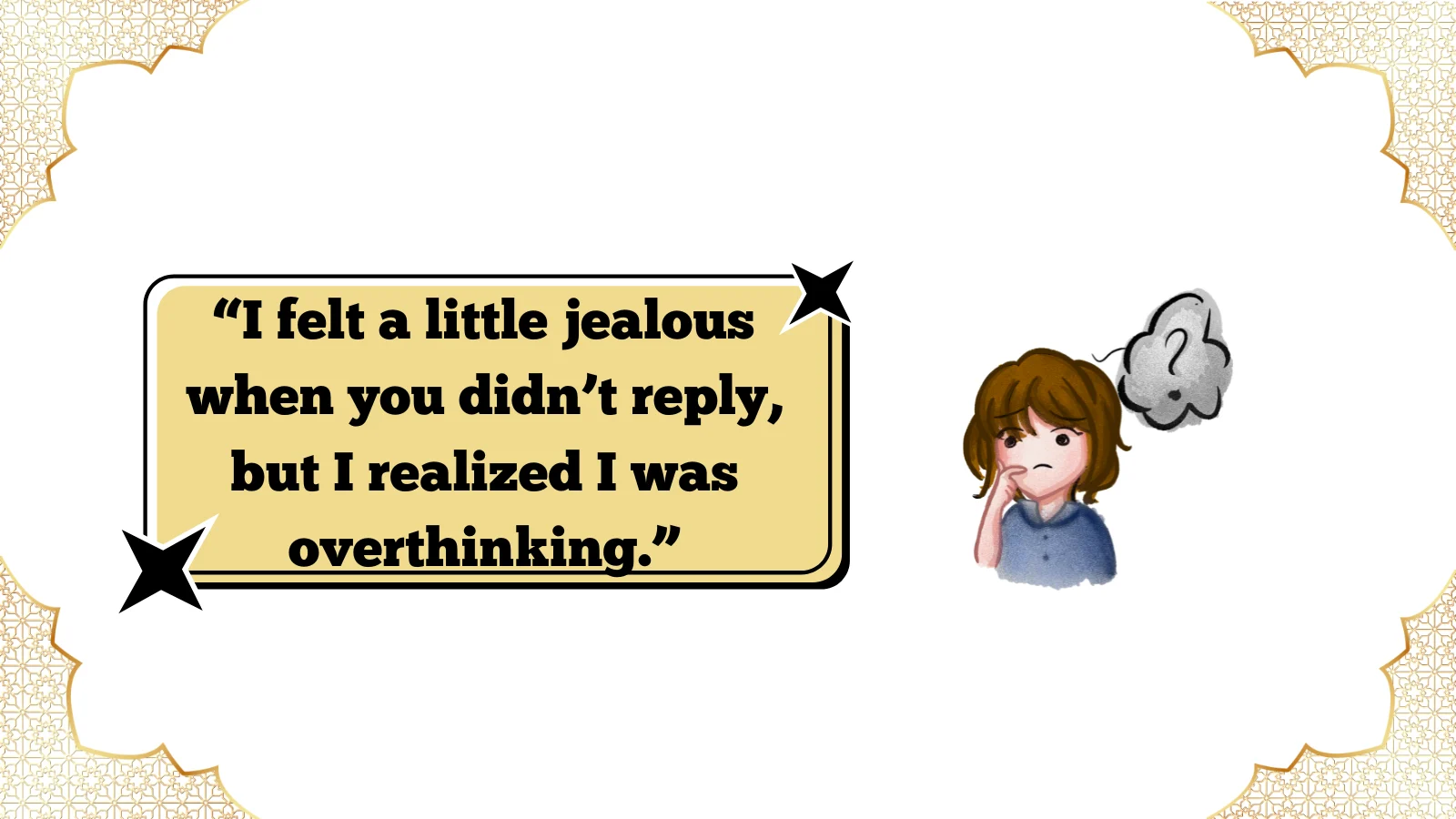
“I felt a little jealous when you didn’t reply, but I realized I was overthinking.”
Unhealthy Jealousy
Unhealthy jealousy includes:
- Constant suspicion
- Controlling behavior
- Checking phones or messages
- Accusations without evidence
- Emotional manipulation
Example:
“If you really loved me, you wouldn’t talk to anyone else.”
🚩 This type of jealousy damages trust and emotional safety.
Jealousy Meaning in Friendship
Jealousy isn’t limited to romance—it often appears in friendships.
Common Friendship Jealousy Triggers
- One friend getting more attention
- New friendships forming
- Career or academic success
- Lifestyle upgrades
- Social media popularity
Example:
“Ever since she made new friends, I feel jealous—and I hate that I feel this way.”
Friendship jealousy is usually rooted in fear of replacement, not hatred.
Jealousy Meaning in Psychology
From a psychological perspective, jealousy is a secondary emotion, meaning it’s built from other emotions like:
- Fear
- Insecurity
- Anger
- Sadness
- Low self-esteem
Why Humans Feel Jealous
Psychologists believe jealousy evolved to:
- Protect relationships
- Preserve social bonds
- Maintain emotional security
In modern life, however, jealousy often gets triggered by:
- Comparison culture
- Social media
- Past trauma
- Attachment styles
Jealousy Meaning in Modern Chat & Texting
In texting and online culture, jealousy is often used casually—or even jokingly.
How Jealousy Is Used in Chat
- “Okay I’m jealous 😭”
- “Not me being jealous right now”
- “Lowkey jealous”
- “They’re just jealous”
- “Jealous much?”
In these cases, jealousy doesn’t always mean anger—it can also mean:
- Admiration
- FOMO (fear of missing out)
- Playful envy
Example Text Conversations
Friend 1: I just booked a trip to Italy 🇮🇹
Friend 2: Wow okay I’m jealous 😩
Partner: That outfit looks amazing
You: Stop, now everyone’s gonna be jealous 😂
Jealousy on Social Media (Why It’s So Intense)
Social media has completely reshaped the jealousy meaning in modern life.
Why Social Media Triggers Jealousy
- Curated perfection
- Highlight reels
- Comparison without context
- Validation through likes
- Constant visibility
You’re not jealous of real life—you’re often jealous of a filtered version of it.
Common Social Media Jealousy Examples
- Seeing someone’s relationship posts
- Watching peers succeed faster
- Comparing bodies or lifestyles
- Feeling left behind
👉 Important reminder:
Comparison is the fastest way to trigger jealousy.
Signs You Might Be Feeling Jealous (Without Realizing It)
Jealousy doesn’t always look obvious. Sometimes it shows up quietly.
Subtle Signs of Jealousy
- Feeling irritated for “no reason”
- Downplaying others’ achievements
- Passive-aggressive comments
- Overthinking interactions
- Avoiding certain people online
- Constant comparison
Recognizing jealousy is the first step to handling it healthily.
Is Jealousy Always Bad?
Short answer: No.
Jealousy itself is neutral—it’s what you do with it that matters.
When Jealousy Can Be Helpful
- Reveals unmet emotional needs
- Signals boundaries being crossed
- Highlights insecurity you can work on
- Encourages communication
When Jealousy Becomes Harmful
- Turns into control
- Leads to resentment
- Causes emotional exhaustion
- Damages trust
How to Deal With Jealousy in a Healthy Way
Here are practical, realistic steps that actually work:
1. Name the Emotion
Instead of reacting, say:
“I’m feeling jealous—and that’s okay.”
2. Identify the Root Cause
Ask yourself:
- What am I afraid of losing?
- What insecurity is being triggered?
3. Avoid Comparison Traps
Mute, unfollow, or take breaks if needed.
4. Communicate Honestly
Express feelings without blame.
5. Build Self-Confidence
Jealousy often fades when self-worth grows.
Common Misunderstandings About Jealousy
Misunderstanding #1: “Jealousy Means You’re Toxic”
Not true. Feeling jealousy is human—acting destructively is the issue.
Misunderstanding #2: “Jealousy Means You Don’t Trust”
Sometimes jealousy comes from fear, not distrust.
Misunderstanding #3: “Confident People Never Feel Jealous”
Even confident people feel it—they just manage it better.
Related Words & Emotional Slang
If you’re exploring the jealousy meaning, you’ll often see these related terms:
- Envy – Wanting what others have
- Insecure – Lacking self-confidence
- Possessive – Wanting control
- FOMO – Fear of missing out
- Comparison trap – Measuring self against others
- Green-eyed – Slang for jealousy
👉 Internal linking idea:
- “Envy Meaning Explained”
- “FOMO Meaning in Text”
- “Insecure Meaning in Relationships”
Jealousy Meaning in One Sentence
Jealousy is the emotional response to the fear of losing something important—or feeling threatened by someone else’s advantage.
FAQs
1. What is the meaning of jealousy?
Jealousy is the feeling of fear, insecurity, or resentment when you think someone or something important may be taken away.
2. Is jealousy a positive or negative emotion?
Jealousy is a natural emotion, but it can become harmful if it leads to unhealthy thoughts or actions.
3. What causes jealousy in relationships?
Jealousy often comes from insecurity, lack of trust, fear of losing someone, or past experiences.
4. What is the difference between jealousy and envy?
Jealousy involves fearing the loss of something you have, while envy is wanting something someone else has.
5. Can jealousy be controlled?
Yes, jealousy can be managed through self-awareness, honest communication, and building self-confidence.
6. Why do people feel jealous?
People usually feel jealous because of insecurity, comparison, fear of rejection, or emotional attachment.
Conclusion!
The jealousy meaning goes far deeper than simple insecurity or bitterness.
It’s a complex, human emotion shaped by fear, attachment, and comparison especially in today’s digital world.
Feeling jealous doesn’t make you weak or flawed; it makes you human.
What matters is how you respond.
When acknowledged and handled with honesty, jealousy can become a guide toward growth, communication, and stronger emotional awareness.
Understanding jealousy is really about understanding your needs, boundaries, and values and learning to choose growth over reaction.
Leave a Reply