In the fast paced world of texting, chats, and online forums, understanding slang and abbreviations can be a lifesaver.
One term you might have seen recently is “about face”.
But what does it actually mean, and how can you use it without confusing your friends or colleagues?
Whether you’ve stumbled across it in a meme, a text, or on social media, knowing the about face meaning is key to keeping your digital conversations on point.
By the end, you’ll be texting like a pro without any awkward missteps.
What Does “About Face” Mean? (Definition & Origin)
“About face” is a phrase that originally comes from military commands, meaning to turn completely around to face the opposite direction. Imagine soldiers marching and suddenly pivoting 180 degrees—boom, that’s an about face.
In everyday language, it’s used metaphorically to describe a complete reversal of opinion, behavior, or decision. For example:
- “After months of hating pineapple on pizza, Jake did an about face and now loves it!”
- “The company made an about face on remote work policies after employee feedback.”
In texting and online chats, people often use about face to highlight sudden changes in opinion or attitude, usually in a humorous or sarcastic way.
Origin Snapshot:
- Military: First recorded in 18th-century drills.
- Figurative: Adopted in English by the 19th century to describe sudden reversals in opinion or policy.
- Modern slang: Frequently used online, especially in Twitter threads, forums, and memes.
How to Use “About Face” in Texts or Chat
Using about face in your digital conversations is simple if you follow a few tips:
- Describe a change of opinion:
- “She did a total about face on veganism—now she can’t stop eating burgers.”
- Highlight irony or humor:
- “He promised he’d never watch reality TV, but did an about face last night.”
- Pair it with emojis for clarity:
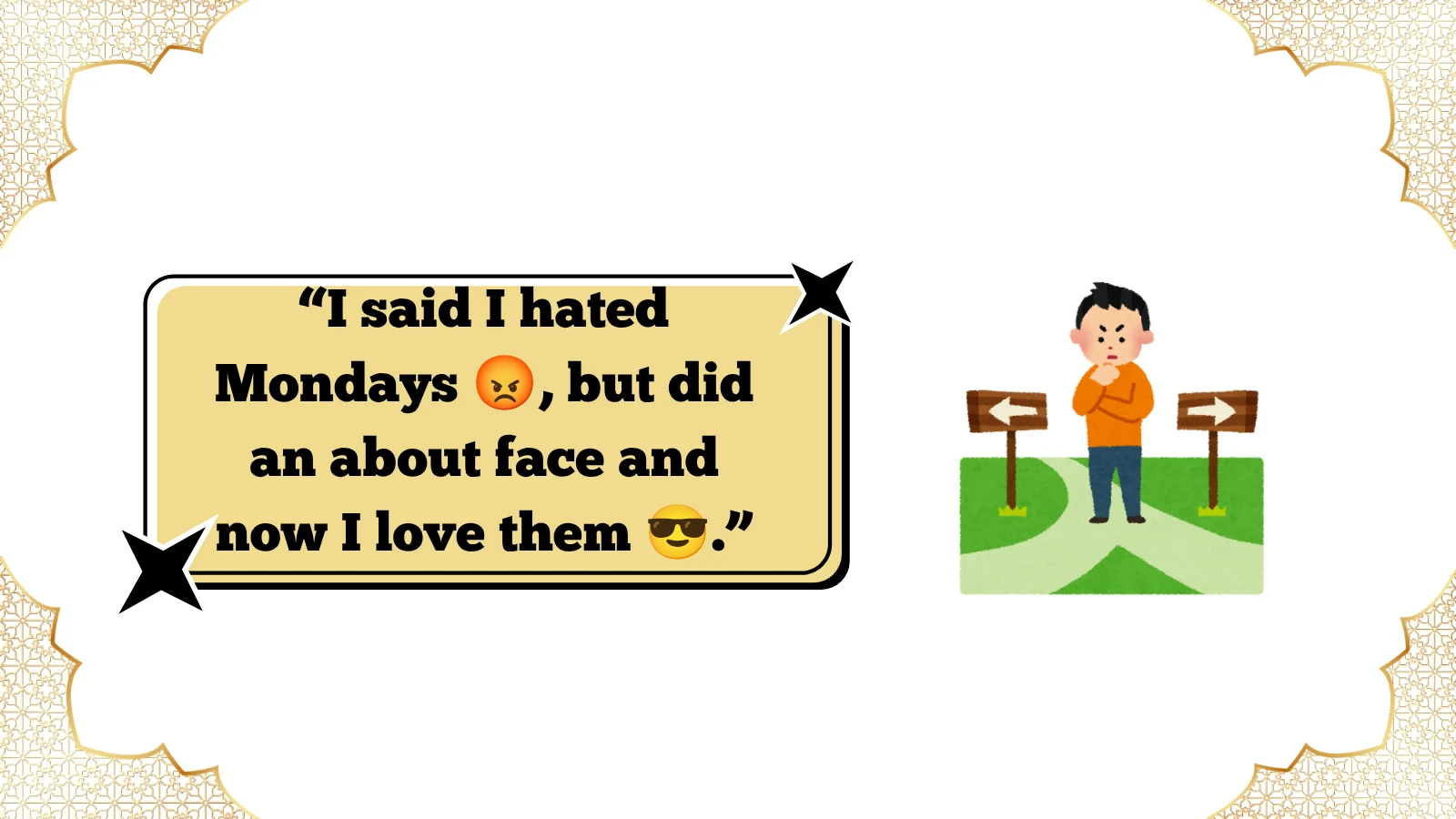
- “I said I hated Mondays 😡, but did an about face and now I love them 😎.”
- Use in group chats for drama or sarcasm:
- “Major about face in our project plans—guess we’re doing the opposite!”
Pro Tip: Keep in mind the tone—about face works best for informal chats, humorous posts, or when pointing out a sudden change. In formal writing, you might want to use alternatives like “reversal” or “shift in stance.”
Examples of “About Face” in Conversations
Here are some realistic chat scenarios to help you understand the about face meaning in action:
Scenario 1: Friends discussing movies
- Alex: “I’ll never watch that horror movie 😬”
- Jamie: “You did a total about face last night when you streamed it!”
Scenario 2: Social media drama
- Tweet: “After calling the new iPhone overpriced, John did a complete about face and pre-ordered the Pro Max. 🤯 #Consistency”
Scenario 3: Work group chat
- Manager: “We were going to cancel the team lunch, but the team did an about face and wants it in-person.”
These examples show how versatile the term is—it can be funny, sarcastic, or even serious depending on context.
Common Mistakes or Misunderstandings
Even though about face is widely understood, people sometimes misuse it. Here’s what to watch out for:
- Using it literally in casual texting:
- ❌ “I did an about face to the store.” → Sounds odd unless you literally mean turning around.
- ✅ “I did an about face on buying that game—it’s actually awesome.”
- Confusing it with “flip-flop”:
- Both indicate a reversal, but flip-flop often implies indecisiveness or inconsistency, while about face is more deliberate.
- Overusing it in informal chats:
- Using about face too often in casual texts can sound stiff. Mix in humor or emojis to keep it natural.
Related Slangs or Abbreviations
Want to sound fluent in 2026 chat culture? Here are some related terms you might see alongside about face:
- Flip-flop – sudden change of opinion, often seen in political discussions.
- U-turn – literal or figurative reversal, e.g., “Made a U-turn on the new app policy.”
- 2-faced – someone behaving inconsistently or hypocritically.
- Glow-up – positive transformation, sometimes used as a playful opposite of an “about face.”
- Rewind – informal slang for reconsidering or going back on a previous statement.
Adding these to your texting vocabulary keeps your conversations fresh and relatable.
Practical Tips for Using “About Face”
Here’s a quick checklist for using about face effectively in texting and social media:
- ✅ Use when someone changes a stance or decision completely.
- ✅ Pair with emojis for tone (😂, 🤯, 😎).
- ✅ Keep it informal—ideal for memes, chats, and posts.
- ✅ Don’t confuse it with casual directions (turning around physically).
- ✅ Mix with related slang for variety: flip-flop, U-turn, etc.
Example Tweet (Updated 2026):
“Me: I hate morning workouts 😴
Also me this week: Total about face—5 AM yoga every day 😎 #Motivation”
FAQs
1. What does “about face” mean?
“About face” means to make a complete change in direction, opinion, decision, or behavior.
2. Where does the phrase “about face” come from?
The term comes from military commands, where soldiers turn 180 degrees to face the opposite direction.
3. How is “about face” used in everyday conversation?
People use it to describe someone who suddenly changes their mind, plans, or actions.
4. Is “about face” a positive or negative expression?
It can be either positive or negative, depending on why the change was made and the context.
5. Can “about face” be used in business or politics?
Yes, it often describes companies, leaders, or governments making a major policy or strategy change.
6. What is another word for “about face”?
Common synonyms include U-turn, reversal, turnaround, and change of heart.
Conclusion
Understanding the about face meaning isn’t just about knowing a phrase it’s about reading digital conversations like a pro.
Whether you’re replying to a friend, posting a witty tweet, or keeping up with the latest memes, this phrase adds clarity, humor, and style to your texts.
Remember: about face = complete reversal, usually in opinion or behavior.
Use it carefully, pair with context clues like emojis, and you’ll avoid confusion while keeping your messages engaging.
Leave a Reply