In today’s fast moving digital world, words don’t always mean exactly what the dictionary says.
One word that often creates confusion in chats, comments, and online conversations is provoke.
You may see it used in arguments on social media, playful teasing between friends, or even sarcastic replies in group chats.
Understanding the provoke meaning in texting and online communication is important because tone, intent, and context matter more than ever.
In chat culture, a single word can change the mood of an entire conversation.
Was the person trying to start drama, make a joke, or simply get a reaction?
That’s where understanding modern usage comes in.
What Does Provoke Mean? (Definition & Origin)
Basic Definition of Provoke
At its core, provoke means:
To cause a reaction, emotion, or response—often intentionally.
Traditionally, the word has a slightly negative tone. It suggests pushing someone’s buttons or triggering a response, especially anger or irritation.
Origin of the Word Provoke
The word provoke comes from the Latin provocare, meaning to call forth or challenge. Over time, it evolved into English with the idea of intentionally stirring emotions or actions.
Provoke Meaning in Modern Texting
In modern chats and online spaces, provoke meaning has expanded. It can mean:
- Intentionally starting an argument
- Teasing or trolling someone for fun
- Posting something to get attention or reactions
- Light-heartedly pushing someone to respond
The tone can range from playful to toxic, depending on context.
How to Use “Provoke” in Texts or Chat
Using provoke correctly depends on how well you know the person and where the conversation is happening.
Common Contexts Where Provoke Is Used
- 💬 Private chats (friends teasing each other)
- 📱 Social media comments (debates, trolling)
- 🎮 Gaming chats (trash talk, mind games)
- 🧵 Forums & Reddit threads (controversial opinions)
Examples of Correct Usage
- “Stop trying to provoke people in the comments.”
- “He posted that just to provoke a reaction.”
- “I wasn’t trying to provoke you, it was just a joke.”
When NOT to Use Provoke
Avoid using the word when:
- The situation is serious or emotional
- The person might feel attacked
- You want to keep things calm and respectful
Examples of “Provoke” in Real Conversations
Here are realistic, modern examples showing how provoke meaning changes with context:
Example 1: Social Media
User A: “That post feels unnecessary.”
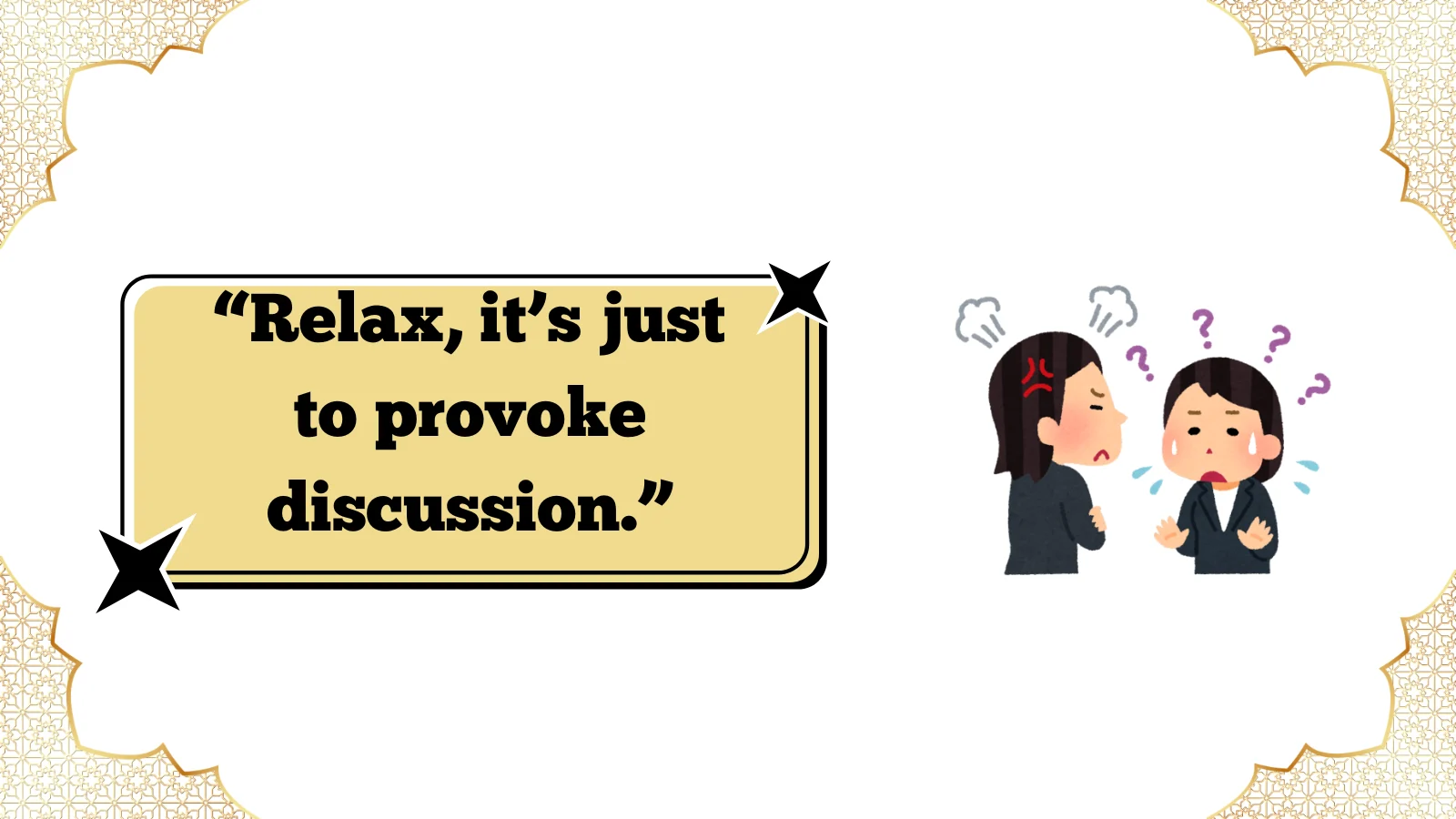
User B: “Relax, it’s just to provoke discussion.”
👉 Here, provoke means spark debate, not anger.
Example 2: Group Chat
“Why do you always provoke him when you know he’ll get mad?”
👉 This implies intentional teasing.
Example 3: Gaming Chat
“He keeps camping just to provoke us.”
👉 Used strategically, not emotionally.
Example 4: Argument
“You said that on purpose to provoke me.”
👉 Clearly negative and confrontational.
Is Provoke Always Negative?
Short answer: No—but it often sounds that way.
Neutral or Positive Usage
Sometimes provoke can mean:
- Encouraging thought
- Sparking conversation
- Challenging ideas
Example:
“That question was meant to provoke critical thinking.”
Negative Usage
More commonly, especially in chats:
- Starting drama
- Triggering emotions
- Annoying someone on purpose
Understanding tone is everything.
Common Mistakes or Misunderstandings
Many people misuse or misunderstand the provoke meaning in chat.
Mistake 1: Confusing Provoke with Joke
Not all jokes provoke—but provoking can feel like bullying if taken too far.
Mistake 2: Using It Too Casually
Saying “I was just provoking” doesn’t always excuse rude behavior.
Mistake 3: Assuming Everyone Understands Your Intent
Text lacks tone. What you mean as playful might feel aggressive to someone else.
Related Slangs or Abbreviations
If you’re learning provoke meaning, these related slang terms often appear in similar contexts:
- Troll – Intentionally provoking people online
- Bait – Posting something to trigger reactions
- Ragebait – Content designed to make people angry
- Instigate – Similar to provoke, but more serious
- Stir the pot – Casual phrase meaning provoke drama
👉 Internal linking suggestion:
You can link this article to guides on “troll meaning in chat”, “bait meaning online”, or “ragebait slang explained.”
How to Use Provoke the Right Way (Practical Tips)
If you plan to use the word provoke in chats or writing, keep these tips in mind:
Best Practices
- ✅ Be clear about intent
- ✅ Use it with people who understand your humor
- ✅ Avoid sensitive topics
- ✅ Add context if needed
Better Alternatives (Depending on Tone)
- Instead of “provoke,” try:
- spark discussion
- tease
- challenge
- joking around
Why Provoke Is Popular in Online Culture (2026 Trends)
In 2026, online conversations thrive on engagement. Algorithms reward reactions, and people often use provoking statements to:
- Gain visibility
- Boost comments and shares
- Trigger debates
- Enter trending discussions
That’s why the provoke meaning is more relevant than ever in digital communication.
Frequently Asked Questions About Provoke Meaning
Does provoke mean insult?
Not always. It can mean triggering any reaction, not just insults.
Is provoke rude?
It can be, depending on tone and intent.
Can provoke be playful?
Yes—among friends who understand each other.
Conclusion
To sum it up, the provoke meaning in texting and online chats goes far beyond the dictionary definition.
It’s a flexible word that can imply teasing, challenging ideas, starting debates, or even intentionally causing drama.
The key difference lies in context, tone, and intent.
What feels playful in a group chat might sound aggressive in a public comment section.
As digital communication continues to evolve in 2026, understanding words like provoke helps you avoid misunderstandings and communicate more effectively.
Whether you’re chatting with friends, posting on social media, or joining online discussions, knowing how and when to use this word can save you from unnecessary conflict and maybe even help you spark meaningful conversations.
Leave a Reply